
-
LatestThe best Filtercoffee machine of 2026
-
 KitchenAid 5KCM1209EOB Programmable 12-cup brewer for effortless everyday coffee.
-
 Philips Gaia HD7547/80 Straightforward batch brewing with a practical thermal carafe
-
 Moccamaster KBG Select Durable, simple filter brewing for consistently balanced coffee.
-
 Krups Grind en Brew KM8328 Programmable whole-bean coffee maker for fresh, convenient pots.
-
 Moccamaster KBGT Premium filter coffee maker with a thermal carafe and simple operation.
-
 Philips HD7900/01 Fresh-ground filter coffee with flexible dual-bean brewing.
-
-
LatestThe best Espresso machine of 2026
-
 SMEG ECF02BLEU Compact retro espresso maker offers hands-on home brewing.
-
 SMEG EGF03BLEU Hands-on espresso control in a stylish all-in-one machine
-
 De’Longhi Linea Classic Approachable manual espresso for compact, hands-on home coffee.
-
 De'Longhi La Specialista Maestro Guided espresso control with built-in grinding and tamping.
-
 Breville The Barista Express Impress Guided fresh-ground espresso with less guesswork at home
-
 Philips Barista Brew PSA3228/01 Hands-on espresso control with an integrated grinder
-
-
LatestThe best Espresso machine of 2026
-
 Gaggia Cadorna Prestige Home café experience with customizable espresso and frothing.
-
 Philips Cafe Aromis 8000 Serie Experience café-quality espresso at home effortlessly.
-
 De'Longhi PrimaDonna Soul ECAM 610.75.MB High-end espresso machine for perfect home brews.
-
 Ninja Luxe Café Pro Espresso ES701 Guided all-in-one coffee for hot and cold drinks.
-
 KitchenAid KF8 5KES8558EBK One-touch café drinks, customizable profiles, effortless milk frothing
-
 Smeg BCC12BLMUS Compact bean-to-cup coffee with convenient one-touch drinks and retro styling.
-
-
LatestThe best Pad- and cupmachine of 2026
-
 De'Longhi Nespresso ENV 150.R Vertuo Café-quality coffee at home, effortlessly brewed.
-
 Lavazza BLUE Classy Mini Compact capsule machine for quick, convenient espresso.
-
 Krups Nespresso CitiZ Compact capsule brewer for quick espresso and lungo
-
 De'Longhi Nespresso Lattissima One Compact capsule machine makes effortless, single-serve milk coffees.
-
 De'Longhi Nespresso Vertuo Pop Compact capsule brewer, five sizes, effortless brewing.
-
 Breville Nespresso Creatista Plus SNE800BSS Capsule espresso convenience meets customizable café-style milk drinks.
-
-
LatestThe best Pad- and cupmachine of 2026
-
 Philips Senseo Original Plus Easy pod brewing for quick, mellow everyday coffee.
-
 Philips Senseo Maestro CSA260/50 Easy coffee-pad brewing, three strengths, and two-cup option.
-
 Philips Senseo Switch Flexible pod and filter brewing for every household.
-
 Philips Senseo Select Simple pod coffee with customizable strength for everyday convenience.
-
-
LatestThe best Pad- and cupmachine of 2026
-
 Krups Dolce Gusto Genio S Plus Compact pod machine makes customizable café-style drinks effortlessly.
-
 Krups Dolce Gusto Piccolo XS Compact capsule machine for varied, manually brewed drinks
-
 Krups Dolce Gusto MiniMe Compact capsule machine for convenient, varied drinks.
-
 Krups Dolce Gusto Infinissima Touch Versatile capsule drinks with simple touchscreen convenience.
-
-
LatestThe best Pad- and cupmachine of 2026
-
 Keurig K-Duo Plus Flexible pod-and-carafe brewing for varied household coffee routines.
-
 Keurig K-Supreme Quick, flexible single-serve coffee with richer pod brewing.
-
 Keurig K-Duo Hot & Iced One brewer for quick cups and full carafes.
-
 Ninja Pods & Grounds Versatile single-serve brewer for capsules or fresh coffee.
-
 Keurig K-Slim Compact single-serve brewer for quick, convenient coffee.
-
 Keurig K-Express Compact pod brewer delivers quick, customizable single cups.
-
Breville The Barista Express Impress review
Breville Barista Express Impress review: See how its built-in grinder and assisted tamping perform, with key pros, cons, espresso quality, and value.
check best price


 2025-04-20
- By Paul van Dorsbergen
Summary / TL;DR

The Breville Barista Express Impress combines a burr grinder, espresso machine and assisted tamping system in one countertop unit. Its dosing guidance and consistent tamp can make puck preparation easier for beginners, while adjustable grind settings, programmable shots and a manual steam wand leave room to refine drinks. It can produce balanced espresso with fresh beans and some experimentation, but it is not fully automatic: dialing in coffee, frothing milk and regular cleaning require time and practice. The machine is relatively large and heavy, and its grinder offers less adjustment than some standalone models. It suits regular coffee drinkers who want an all-in-one setup and enjoy a hands-on routine; those seeking one-touch convenience or a more upgradeable system may prefer alternatives.
If you like this review, you might also like our review on the Breville The Barista Touch Impress or Breville The Bambino Plus or Breville The Barista Express.
Where to buy
 Best offers of the Breville The Barista Express Impress at Amazon.com
Want to help us grow? When you purchase items through the above links we receive a small commission.
Introduction
The Breville Barista Express Impress is a home espresso machine for people who want more control than a pod machine offers, but don’t want every morning to begin with guesswork. It combines an espresso maker and coffee grinder in one unit, with an assisted tamping system designed to make preparing a puck of grounds less fiddly. That makes it a practical middle ground: you still choose the beans and make the coffee, while the machine helps keep a few of the routine steps more consistent.
Think of a weekday cappuccino before work: you can grind fresh coffee and pull a shot without setting up a separate grinder or reaching for a stack of accessories. The trade-off is that this is still a manual espresso machine, not a one-touch coffee maker. You’ll need to learn its basic routine and leave some counter space for it. For anyone comparing home espresso machines with built-in grinders, though, the Impress offers an approachable starting point without taking all the craft out of making a cup.
Related reviews
-

-
 Philips Cafe Aromis 8000 SerieEspresso machines
-

Design and Build Quality
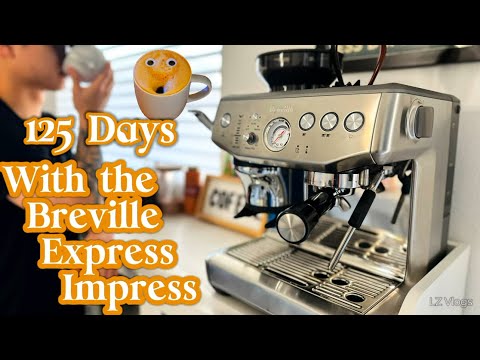
The first thing you notice is the brushed stainless-steel front: it gives this espresso machine a more substantial look than an all-plastic countertop model, without feeling overly showy. The body measures about 13 × 12.5 × 16 inches, so check the space under your cabinets before buying. The height can make access to the bean hopper awkward on a low shelf, and you’ll want room behind the machine to lift out its water tank.
Countertop fit and everyday details
The controls and pressure gauge sit clearly on the front, while the portafilter area is easy to reach without shifting the machine around. Its stainless-steel finish suits most kitchens, though it will show fingerprints and water marks; a quick wipe keeps it looking tidy. The sides and smaller trim pieces feel less premium than the front, but that’s typical for a home espresso machine with this many integrated parts.
The removable water tank holds 2 litres (67 ounces), and the bean hopper holds about 250 grams. Both are useful capacities for daily home use, but the tank’s position means you need enough clearance to lift it straight up for refilling. The drip tray has a red float indicator that rises as it fills—a handy detail if the machine sits beneath a cabinet, where it’s easy to miss the water level.
At roughly 23 pounds, the Barista Express Impress stays put during normal use, but it isn’t a machine you’ll want to move every morning to reclaim counter space. Its mix of metal surfaces, firm controls and practical removable parts makes it feel built for regular use, with a footprint and finish that are worth considering before you settle on a spot.
What's in the Box
The box includes most of the small accessories needed to get started, so you won’t need to buy a separate espresso machine starter kit straight away. Expect a 54mm stainless-steel portafilter, a 480ml milk jug, and four filter baskets: single- and double-shot versions in both single-wall and dual-wall styles.
- Razor dose trimming tool: levels excess coffee in the portafilter after dosing.
- Cleaning kit: includes a cleaning disc, tablets, a brush and an Allen key for routine care.
- Water filter and holder: fit inside the tank to help reduce mineral buildup.
The two basket types are handy from the start: dual-wall baskets can help produce a crema-like layer with supermarket pre-ground coffee, while single-wall baskets are suited to freshly ground beans. The included milk jug is a practical size for a single cappuccino or flat white, though you may want a larger jug if you regularly make two milk drinks back to back.
Box contents can vary slightly by region, so check the retailer’s listing if a particular accessory matters to you. The machine’s tamper is built in, rather than supplied as a separate loose tool.
Setup and Ease of Use
Getting the Breville Barista Express Impress ready for its first espresso takes a little more attention than setting up a pod machine, but the steps are straightforward. Fit the water filter into the tank, fill it with fresh water, add beans to the hopper and run the initial rinse described in the manual. That first flush clears the water path and helps you start with a clean machine. Leave room beside the machine, too: you’ll need space to lift out the tank and swing open the bean hopper lid.
Once it’s warmed up, the routine is easy to learn. Grind into the portafilter, check the machine’s dose-level lights, then tamp using the side lever. The indicator is handy for beginners: if your first dose comes up short, it gives you a clear cue to grind a little more rather than leaving you to guess. After a few tries, the sequence becomes familiar, though it still takes longer than pressing a button on a fully automatic espresso machine.
Expect a bit of trial and error at the start. A new bag of beans, or even beans that have been open for a few days, can change how much coffee the grinder delivers. You may need to adjust the grind setting and let the dose indicator guide your next attempt. The machine helps make the process more consistent, but it doesn’t remove the small adjustments that come with making espresso at home.
For a tidy home espresso setup, keep a cloth nearby for stray grounds and empty the drip tray regularly. The tray can fill faster than you’d expect if you’re rinsing the group head between drinks. Overall, the controls are easy to follow, and the guided tamping routine makes the first-time espresso workflow less fiddly without making it feel entirely hands-off.
Espresso Quality and Performance
The espresso has the depth and body you’d expect from a good home machine, provided the coffee is fresh and the grind is dialled in. A medium roast can produce a sweet, rounded shot with a thin layer of crema, while a darker roast tends to taste heavier and more bitter if you let it run too long. The Breville Barista Express Impress gives you useful control over that process without requiring you to guess at every step.
Consistent extraction, with room to adjust
Its PID temperature control helps keep brew temperature steady, and low-pressure pre-infusion wets the coffee puck before full pressure builds. That gradual start can help reduce uneven extraction, which often shows up as a shot that tastes sour in one sip and harsh in the next. The pressure gauge offers a quick visual check as the shot runs, though it’s best treated as a guide rather than a direct measure of flavour.
For a practical starting recipe, try 18 grams of coffee and aim for around 36 grams of espresso in roughly 25–30 seconds. Those figures aren’t rules: a light roast may need a finer grind or a longer ratio to bring out sweetness, while a dark roast can taste better with a shorter shot. The machine’s programmable shot volumes make it easy to repeat a recipe once you find one you like.
There are limits. The 54mm portafilter produces satisfying espresso for everyday drinks, but this machine doesn’t offer the fine temperature adjustments or deeper extraction controls found on pricier prosumer models. And no built-in setting can rescue stale beans or a poorly matched grind. Still, with fresh coffee and a little adjustment, it makes balanced espresso at home that works well both straight and as the base for milk drinks.
Impress Puck System and Integrated Grinder
The Impress Puck System takes some of the guesswork out of preparing a portafilter. Grind into the basket, then pull the side lever down to tamp; the machine applies a consistent tamp and finishes with a small barista-style twist. A pressure indicator gives you a quick visual check, which is handy when you’re still learning how much coffee the basket should hold.
Its dose system also adjusts the next grind based on the previous one. So if your first basket comes up short after tamping, the machine can add a little more coffee next time. It’s a practical fix for the common beginner routine of tamping, spotting a low puck, and starting over. You still need to make the initial grind and dose adjustments yourself, though—it’s assistance, not a one-button setup that dials in every new bag of beans.
What the integrated grinder adds
The built-in conical burr grinder has 25 grind settings and feeds grounds straight into the 54mm portafilter. Keeping the grinder and tamping system together makes the workflow tidy: there’s no separate grinder to position, and fewer loose grounds end up on the counter. The grind setting gives you room to adjust for different beans, while the Impress dosing system helps keep the basket fill more consistent once you’ve found a workable setting.
For example, after switching to a fresher bag, you may need a finer grind and a small dose correction. The grinder handles the adjustment; the puck system helps with repeatable tamping. That doesn’t remove the need to experiment, but it makes each change easier to track than juggling a separate grinder, scale, and tamper.
There are limits. The grinder can be noisy, and 25 settings don’t offer the fine adjustment range of some standalone grinders. The assisted tamp also takes a little practice to use smoothly. Still, for a home barista who wants an espresso machine with an integrated grinder and assisted tamping, the Impress system cuts down on messy, inconsistent puck prep without taking all the hands-on work away.
Milk Frothing and Drink Versatility
The manual steam wand gives you control over milk texture, rather than doing the frothing for you. Its four-hole tip pushes steam through the milk quickly, and the wand swivels to make it easier to position a small pitcher beneath it. With a little practice, you can make glossy microfoam for latte art or leave more air in the milk for a cappuccino.
For a smooth latte, start with cold milk and keep the wand tip just below the surface long enough to introduce a soft hiss. Then lower the tip slightly to create a whirlpool and break up larger bubbles. Stop steaming before the pitcher gets too hot to hold comfortably; milk that’s overheated can taste flat and won’t pour as neatly. The technique takes a few tries, especially with smaller amounts of milk, but it’s rewarding once you get the hang of it.
The machine suits a range of espresso-based drinks, including flat whites, cappuccinos and lattes, and its hot water function is handy for an Americano or a quick cup of tea. You can also froth oat or soy milk, though results vary by brand: “barista” versions usually make denser, more stable foam than standard cartons. One small drawback is that frothing is hands-on, so making several milk drinks in a row takes longer than using an automatic milk system.
Competitor comparison
The Breville Barista Express Impress sits between a simple bean-to-cup machine and a fully hands-on home espresso setup. Its closest rivals make different trade-offs: some cost less but leave more of the preparation to you, while others automate milk steaming or offer more room to upgrade.
How it compares with other home espresso machines
| Machine or setup | What you gain | What you give up |
|---|---|---|
| Breville Barista Express | Integrated grinder and a familiar all-in-one layout, often at a lower price. | You tamp manually, so getting the same puck preparation shot after shot takes more practice. |
| Breville Bambino Plus with a separate grinder | Fast heat-up and automatic milk frothing, which is handy for making several cappuccinos in a row. | You need to choose and fit a grinder, and manage dosing and tamping yourself. |
| Gaggia Classic Pro | A more traditional, hands-on machine with a 58mm portafilter and plenty of scope to build a separate grinder-based setup. | It has no built-in grinder or assisted tamping, so the overall setup can take more counter space and practice. |
Compared with the standard Barista Express, the Impress is mainly a convenience upgrade: its assisted tamping system helps make puck preparation more repeatable, especially for someone who is still learning how much pressure and coffee to use. The regular model can be a better buy for an experienced user who already has a consistent tamping routine and would rather spend less.
A Bambino Plus paired with a good grinder is a stronger alternative for milk drinks. Its automatic steaming takes some of the guesswork out of texture, while the Impress keeps the grinder and assisted tamping in one machine. Picture a small kitchen where you make a latte before work: the all-in-one layout is tidy, but the Bambino Plus has the edge if hands-free milk preparation matters more than a built-in grinder.
The Gaggia Classic Pro suits people who want a more manual espresso routine and may upgrade individual parts over time. Its 58mm portafilter also matches the size used by many prosumer accessories, while the Impress uses a narrower 54mm portafilter. For a newcomer seeking an espresso machine with grinder and assisted tamping, though, the Impress asks for less trial and error than the Gaggia setup. The better choice depends on whether you value guided convenience, automatic milk steaming, or hands-on control.
Value and Ownership
The value here isn’t just the espresso machine’s purchase price; it’s how often you’ll use it and whether you’re happy to handle basic upkeep. At around $900 USD at typical list price—with sale prices varying—it sits in the middle-to-upper range for a home espresso setup. The built-in grinder means you don’t need to budget for a separate one, but good beans, milk, filters, and cleaning supplies still add to the cost of ownership.
What the ongoing costs look like
For a rough comparison, say a café latte costs $5.50 and a homemade version uses about $1 of coffee and milk. That’s roughly $4.50 saved per drink before accounting for wasted beans, filters, and maintenance. At five drinks a week, the simple payback estimate is close to four years; at two drinks a day, it’s closer to a year and a half. Those figures are only a guide, but they show why this machine makes more financial sense for a regular coffee drinker than for someone who pulls an occasional weekend shot.
There are small practical costs, too. The machine uses a water filter that needs replacing, and regular cleaning calls for supplies such as espresso machine cleaning tablets. In a hard-water area, descaling may come up more often, so following the manual’s water and cleaning guidance can help avoid unnecessary upkeep. It’s not a maintenance-free appliance, though most of the routine work is straightforward and doesn’t require a technician.
Is it a worthwhile long-term buy?
The Barista Express Impress offers good home espresso machine value if you want one countertop machine for daily espresso drinks and don’t mind cleaning it. It also gives beginners room to build their skills without immediately buying extra equipment. The trade-off is that a machine with built-in components can’t be upgraded piece by piece as easily as a separate grinder-and-machine setup. If your coffee habits change, you may eventually want more control or higher-end equipment.
For a household that makes coffee most mornings, the cost is easier to justify than it first appears. For a once-a-week cappuccino, café visits or a less expensive setup may cost less overall. Think of it as a substantial upfront purchase with manageable ongoing expenses—not a guaranteed money-saver for every kitchen.
Conclusion
The Breville The Barista Express Impress makes the most sense for someone who wants fresh-ground espresso at home but doesn’t want every shot to feel like a new experiment. Its assisted workflow can help keep weekday coffee consistent, while still leaving room to adjust the grind and recipe as your taste changes. It’s a more hands-on choice than a capsule machine, but less fiddly than building an espresso setup from separate parts.
There are trade-offs: it takes up counter space, needs regular cleaning, and won’t make espresso completely effortless. If you mostly want to press one button and walk away, a bean-to-cup machine may suit you better. But for a home barista who enjoys learning through small tweaks—like changing the grind after opening a new bag of beans—it’s a capable all-in-one espresso machine with useful guidance built in.
Pros & cons
Pros
- Built-in grinder and assisted tamping
- Guided dosing helps beginners
- PID control and pre-infusion
- Makes balanced espresso with fresh beans
- Useful accessories included
Cons
- Manual workflow takes practice
- Bulky and needs ample counter space
- Noisy grinder with limited fine adjustment
- High upfront cost
Frequently Asked Questions
The Sage Barista Express Impress stands out with its assisted tamping system and intelligent dosing feature, which simplifies the espresso-making process. Unlike other models, it automates the tamping and dosing, making it more user-friendly for beginners.
To clean the Sage Barista Express Impress, use the built-in cleaning cycle. Insert a cleaning tablet into the portafilter with the cleaning disc, then run the cycle by pressing the '1-cup', '2-cup', and 'Power' buttons simultaneously. Rinse thoroughly after the cycle completes.
For the Sage Barista Express Impress, a fine grind similar to table salt is ideal for espresso. Adjust the grind setting using the machine's dial to achieve this consistency.
It is recommended to use only Sage-approved accessories with the Sage Barista Express Impress to avoid potential safety hazards like fire or electric shock.
A balanced double shot with the Sage Barista Express Impress typically takes between 25-30 seconds to brew.
The Sage Barista Express Impress has a water reservoir capacity of approximately 2 liters (67.6 fl oz).
Yes, the Sage Barista Express Impress features a built-in stainless steel conical burr grinder, allowing you to grind your coffee beans directly into the portafilter.
The Sage Barista Express Impress is highly suitable for beginners due to its assisted tamping and intelligent dosing system, which simplifies the espresso-making process.
Calibrate the Auto Tamping System by following the steps in the user manual. This involves adjusting the dose and grind size to match your coffee beans for optimal performance.
The Sage Barista Express Impress typically comes with a 1-year warranty, though this may vary depending on the region and retailer.
Important
Before buying any product, check all details of this product on the website or in the store where you purchase it. Aspects and specifications mentioned in the text above might differ.

Written by Paul van Dorsbergen
Paul van Dorsbergen is a renowned coffee enthusiast whose reviews serve as a trusted resource for both novice and seasoned coffee lovers. With a background in engineering, Paul brings a unique perspective to his assessments, focusing on the technical aspects of coffee machines with precision and clarity. His passion for coffee culture, sparked at a young age, has driven his career for over a decade, making him a respected voice in the coffee community.
Beyond his technical expertise, Paul enriches his reviews with insights from his travels across Europe and beyond. His experiences at coffee farms in Colombia, espresso bars in Italy, and bustling cafes in Japan add depth and authenticity to his writing. Paul's dedication to quality and authenticity has earned him a loyal following, making his reviews an invaluable guide for anyone looking to explore the art and science of coffee making.
Read more about PaulWhere to buy
More Sage / Breville reviews
-
 Breville the BBQ & Press review
Versatile indoor grill for burgers, vegetables, and paninis
Videos
-

-

-

-
-

-
 Sage (Breville) Barista Comparison - Express vs Express Impress vs Pro!Tom's Coffee Corner


